
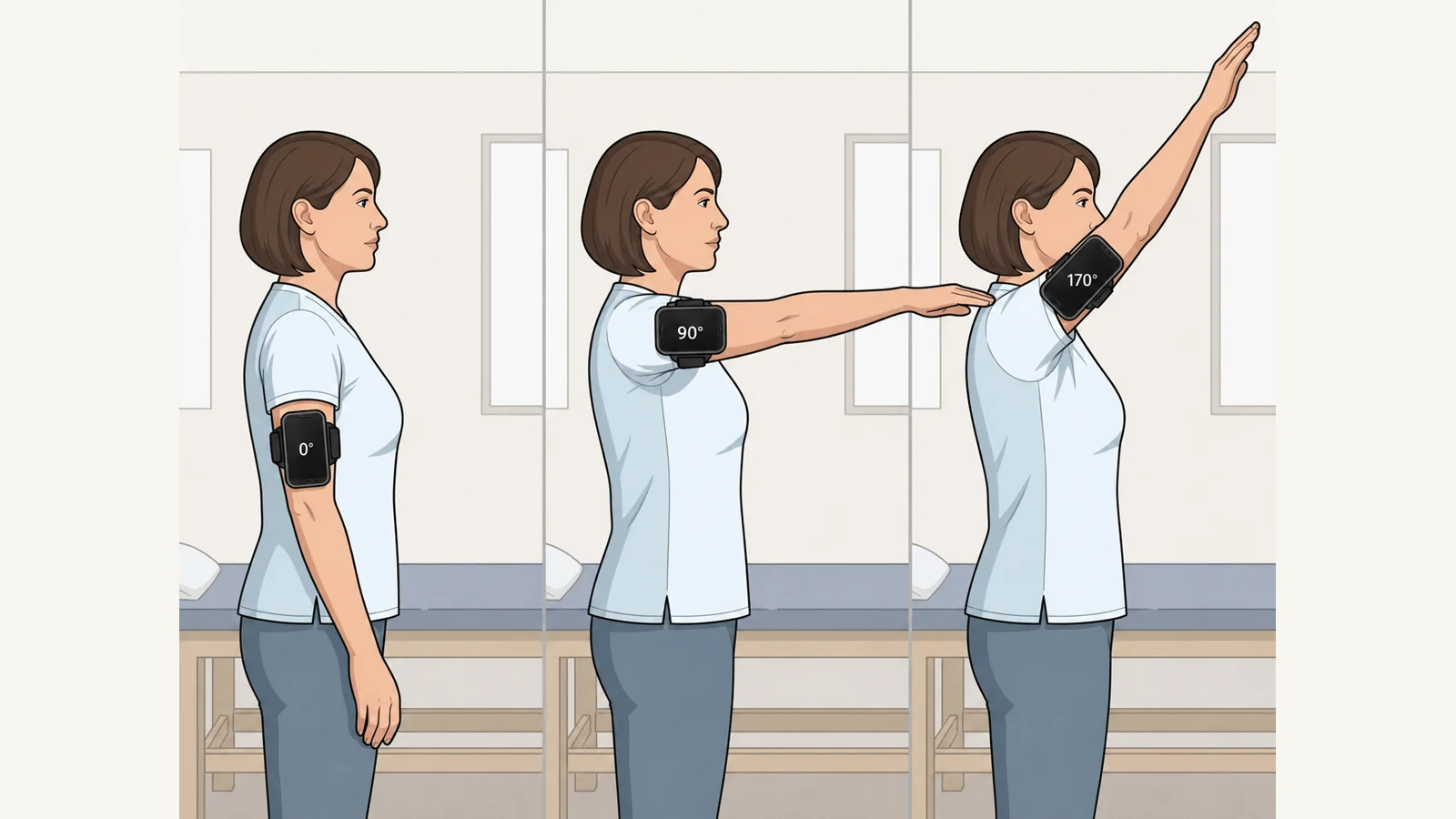
Shoulder Flexion ROM
A clinician-facing protocol for measuring shoulder flexion while controlling trunk extension and scapular compensation.
Sagittal plane
Open Guide



Four movements have named guides in Cobb Angle Pro: shoulder flexion, shoulder internal rotation, knee flexion, and ankle dorsiflexion. Other movements use the app's Custom workflow with generic guidance. These pages support measurement and documentation; interpretation stays with the clinician.
A clinician-facing protocol for measuring shoulder flexion while controlling trunk extension and scapular compensation.
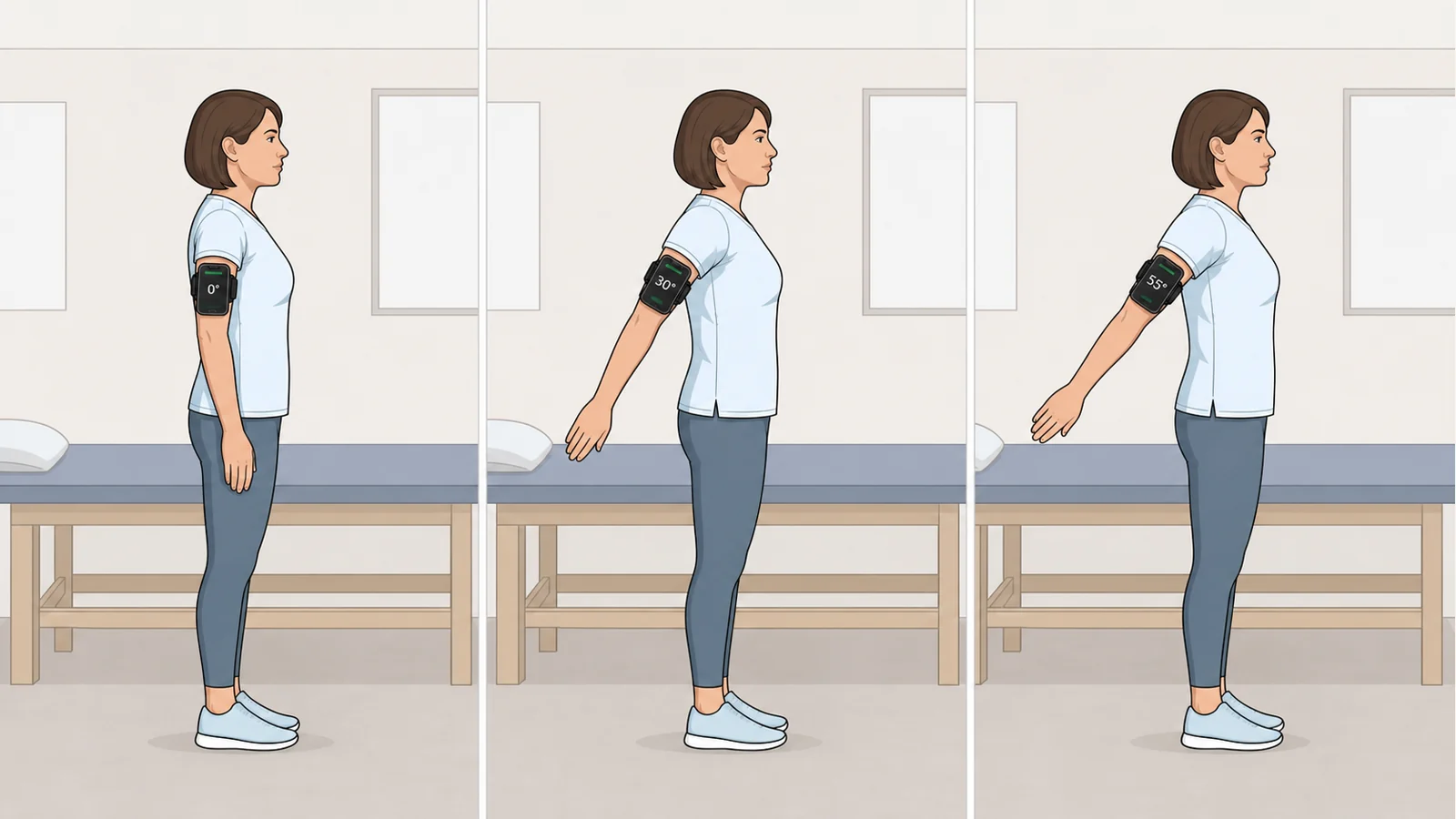
Measure posterior shoulder movement without letting trunk flexion or anterior shoulder tilt inflate the result.
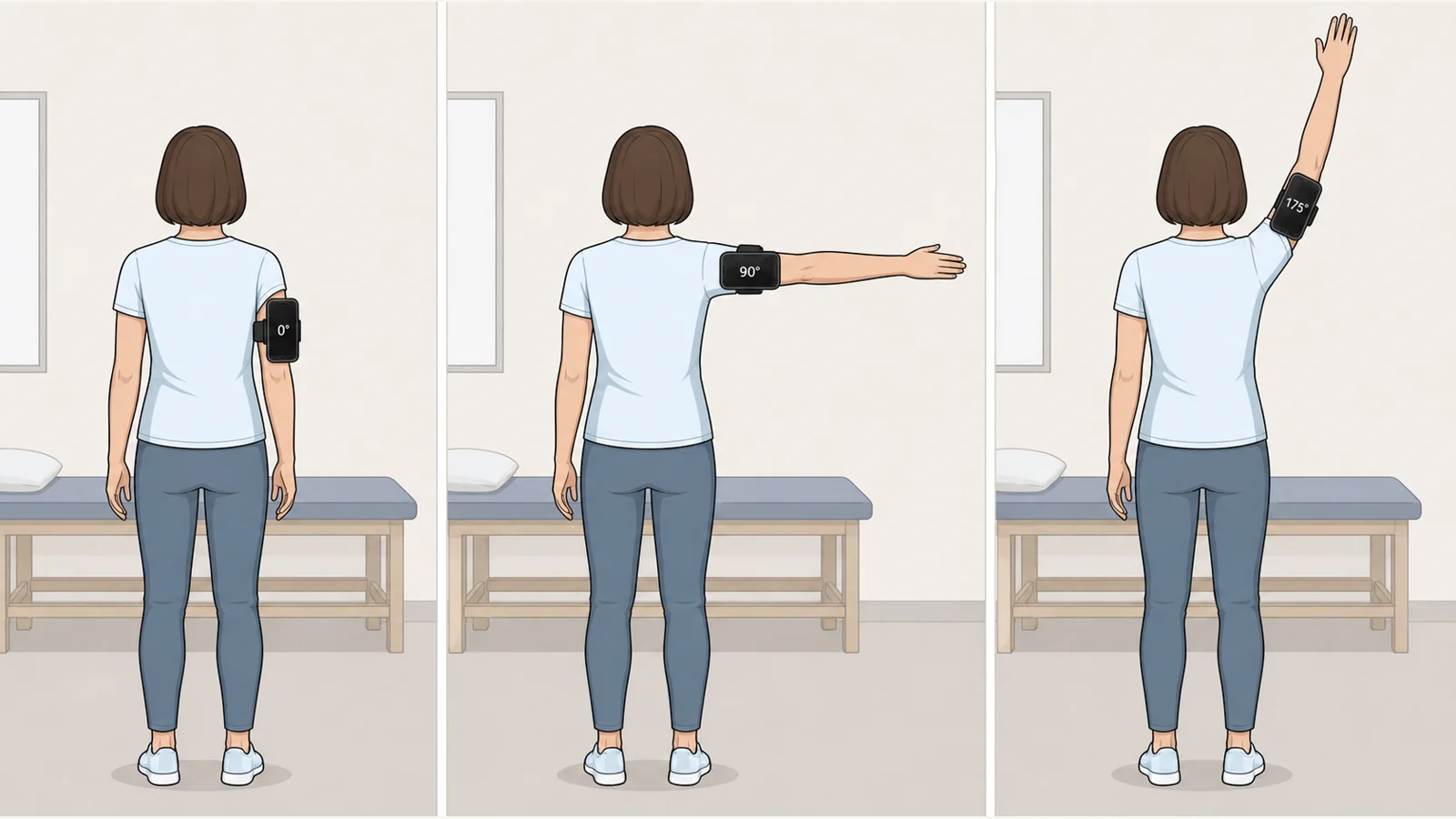
A frontal-plane shoulder abduction reference built around scapular control, trunk alignment, and end-range documentation.
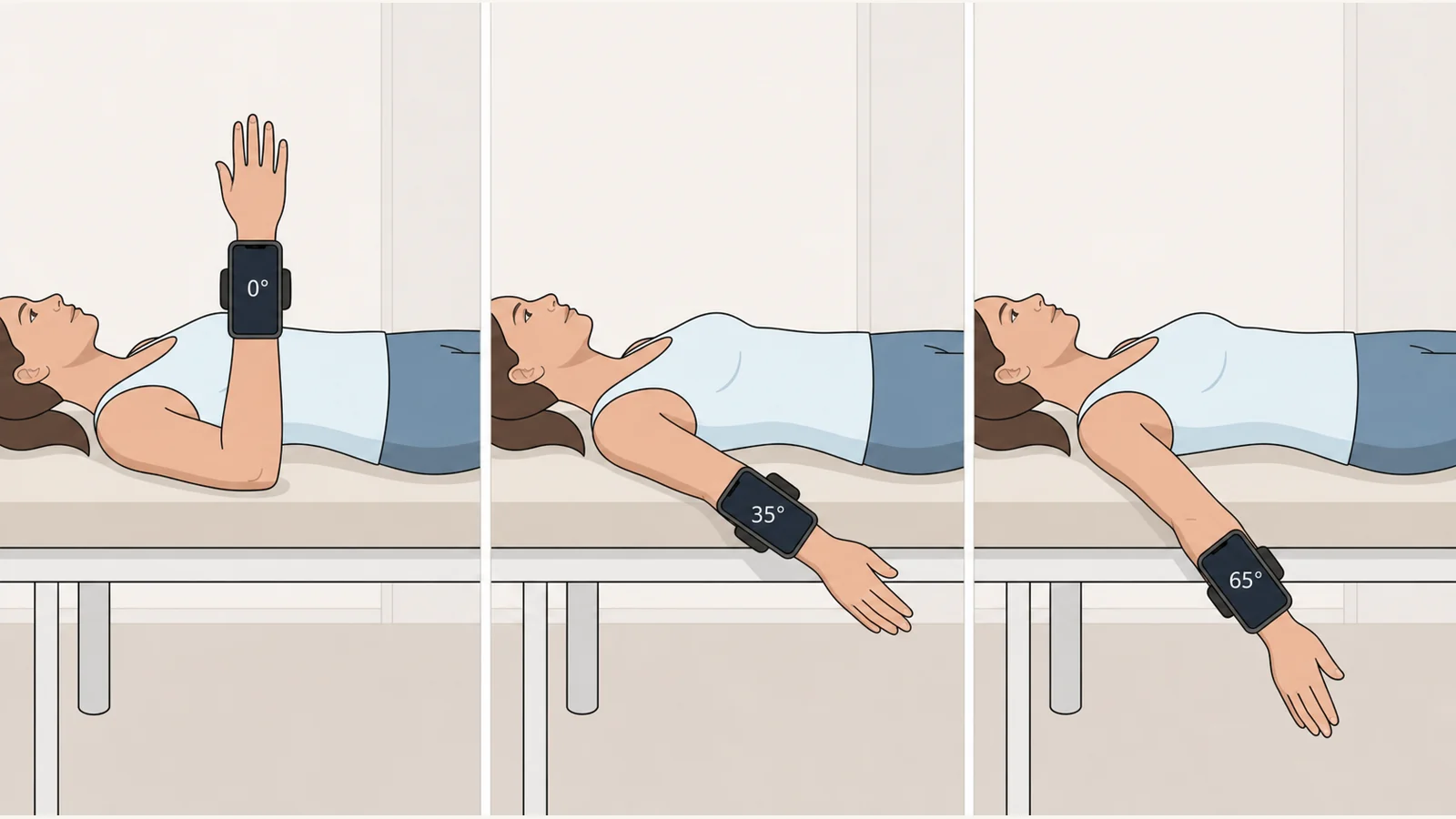
Measure shoulder internal rotation in a repeatable supine setup while controlling scapular lift and forearm alignment.
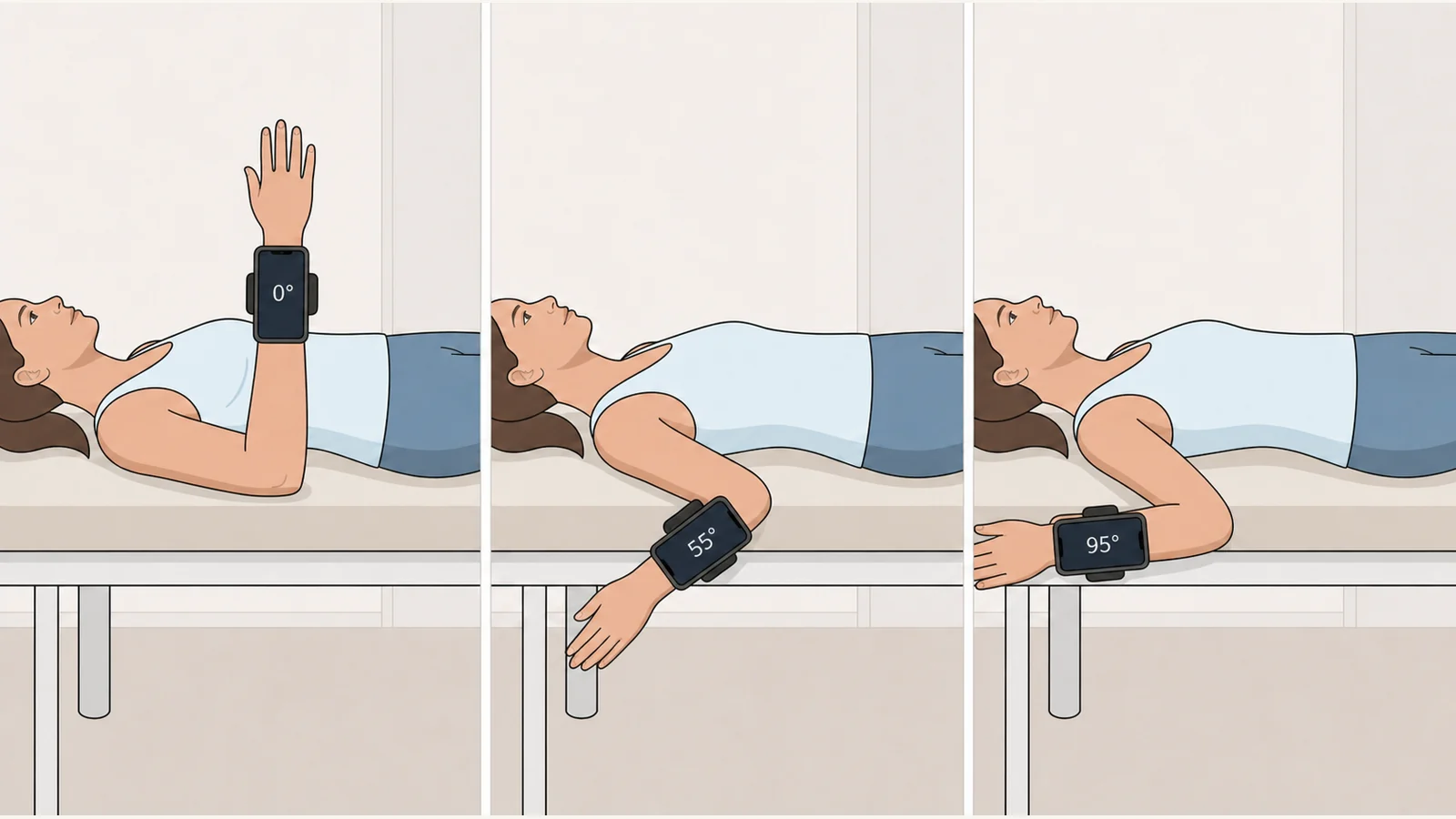
A shoulder external rotation measurement reference for supine 90/90 setup and end-range documentation.
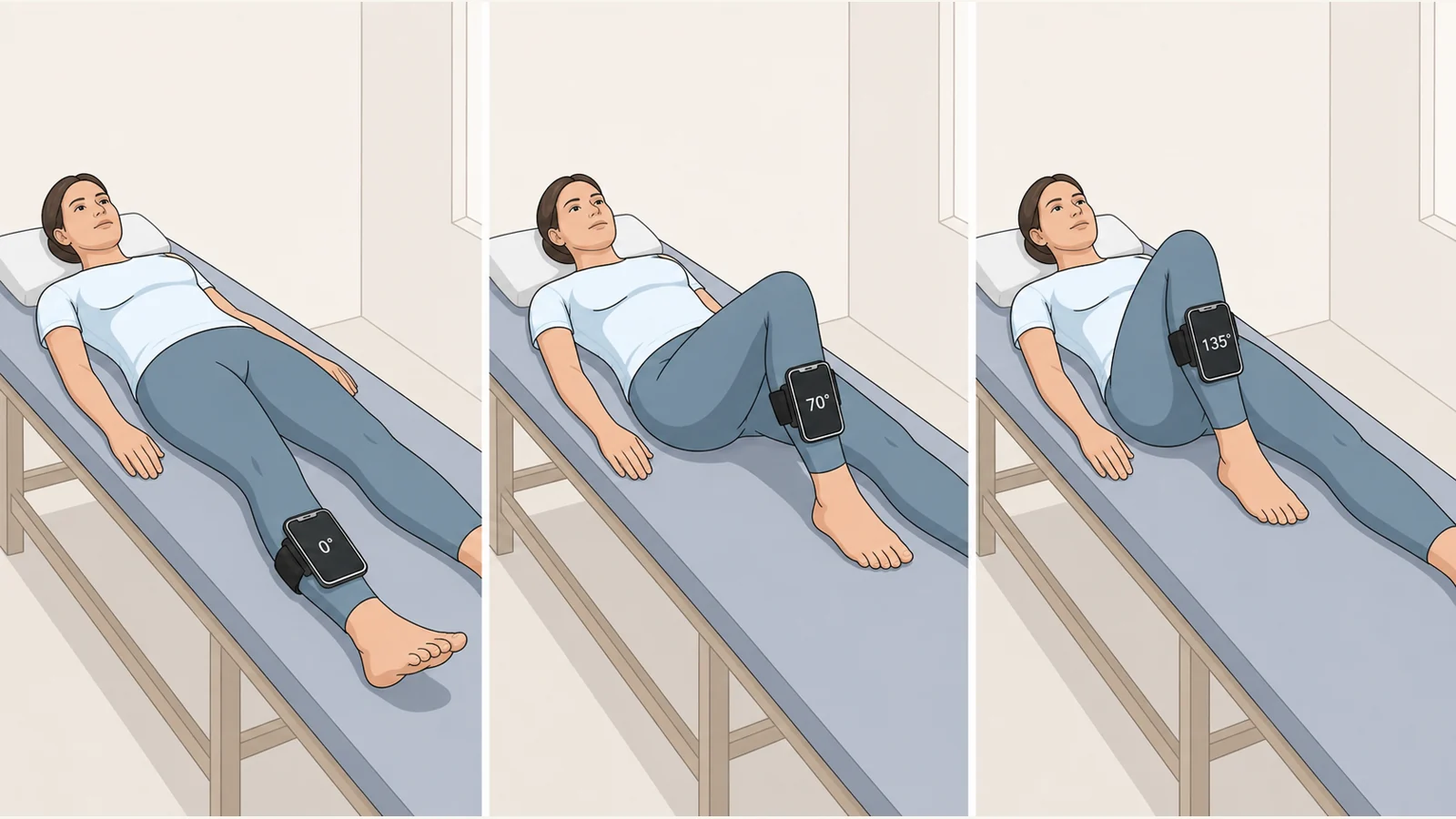
A knee flexion ROM protocol for documenting sagittal-plane bending after injury, surgery, or mobility-focused care.
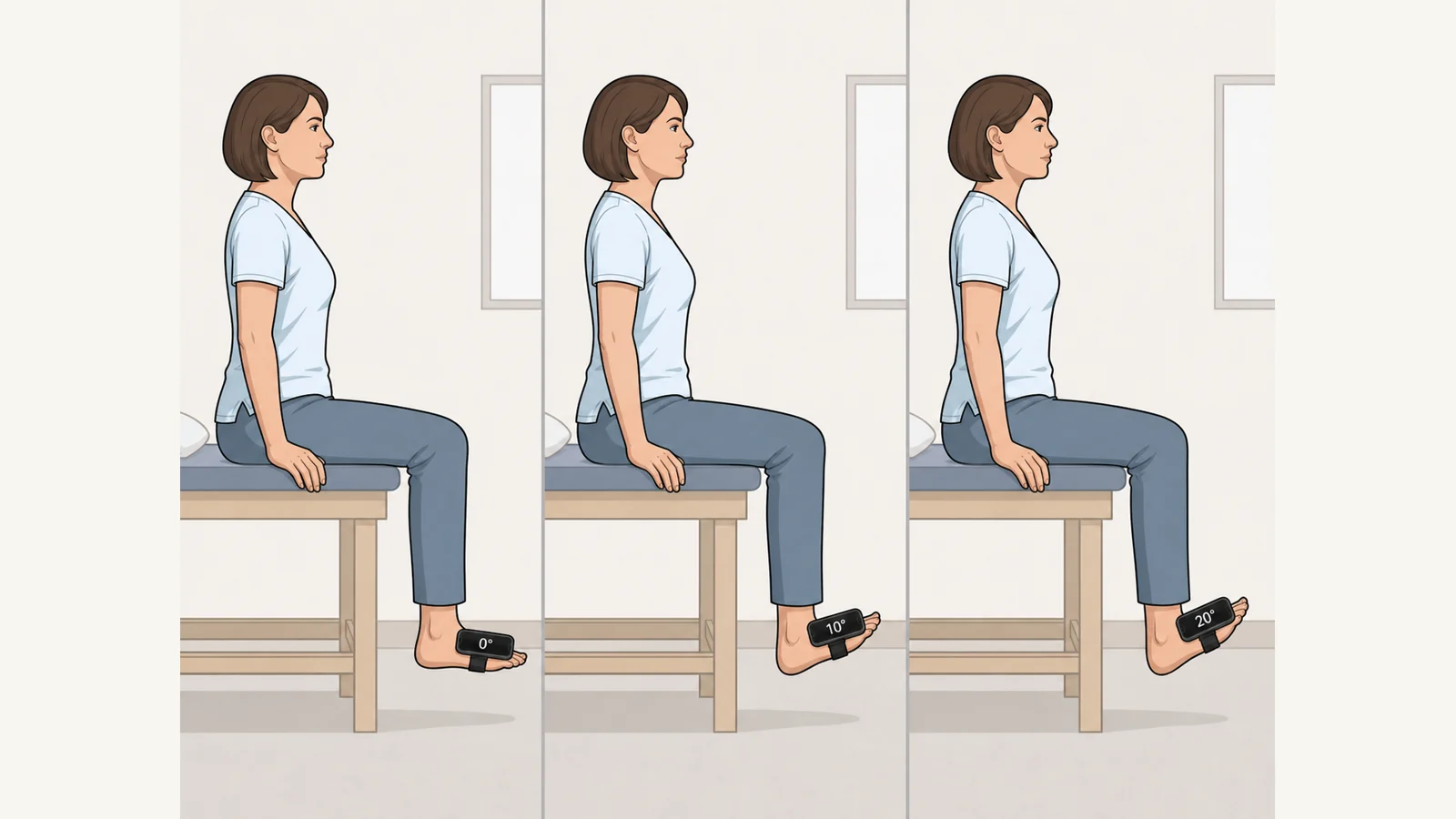
A dorsiflexion measurement guide for non-weight-bearing and weight-bearing ankle mobility documentation.
A supine hip flexion measurement reference that controls posterior pelvic tilt and lumbar flexion.
A prone hip extension measurement reference that controls pelvic rotation and lumbar extension.
A frontal-plane hip abduction measurement reference that controls lateral pelvic tilt.
A knee extension measurement reference for documenting extension deficits after injury or surgery.
A seated elbow flexion measurement reference with humeral stabilization and forearm alignment.
An elbow extension measurement reference for documenting extension deficits and hyperextension.
A wrist flexion measurement reference with forearm support and fifth-metacarpal alignment.
A wrist extension measurement reference that controls finger position and forearm lift.
An ankle plantarflexion measurement reference that accounts for midfoot contribution.
A seated cervical rotation measurement reference that controls trunk rotation.
A standing lumbar flexion measurement reference using a dual-inclinometer approach.