




Measurement Snapshot
There is no single value that establishes normality for every person or method. Record the setup and compare measurements in clinical context.
Ankle dorsiflexion affects gait, squat mechanics, and lower-limb compensation patterns. Use the measurement as one mobility datapoint inside a broader clinical exam.
Standardized Setup
- Patient Position
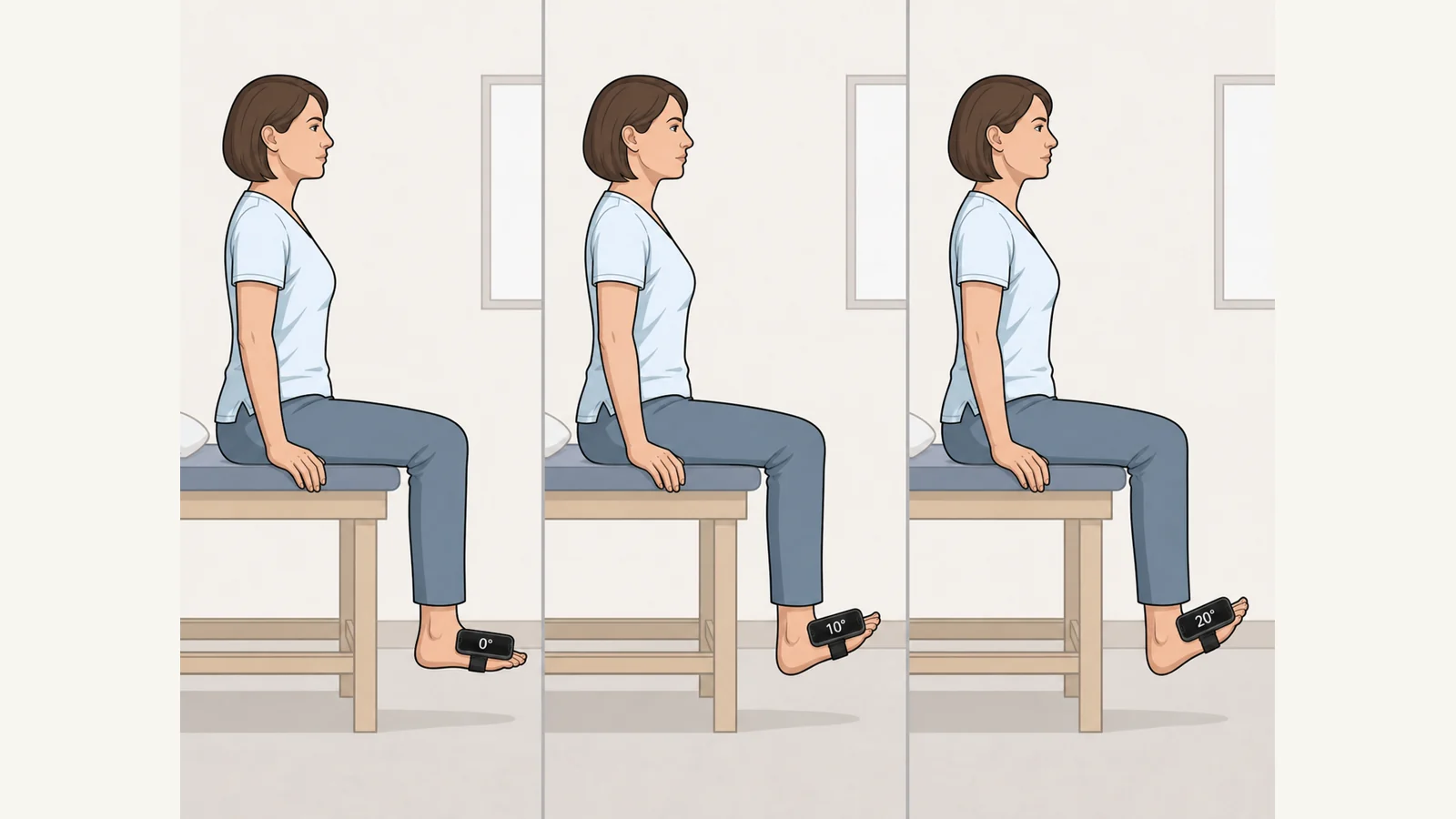
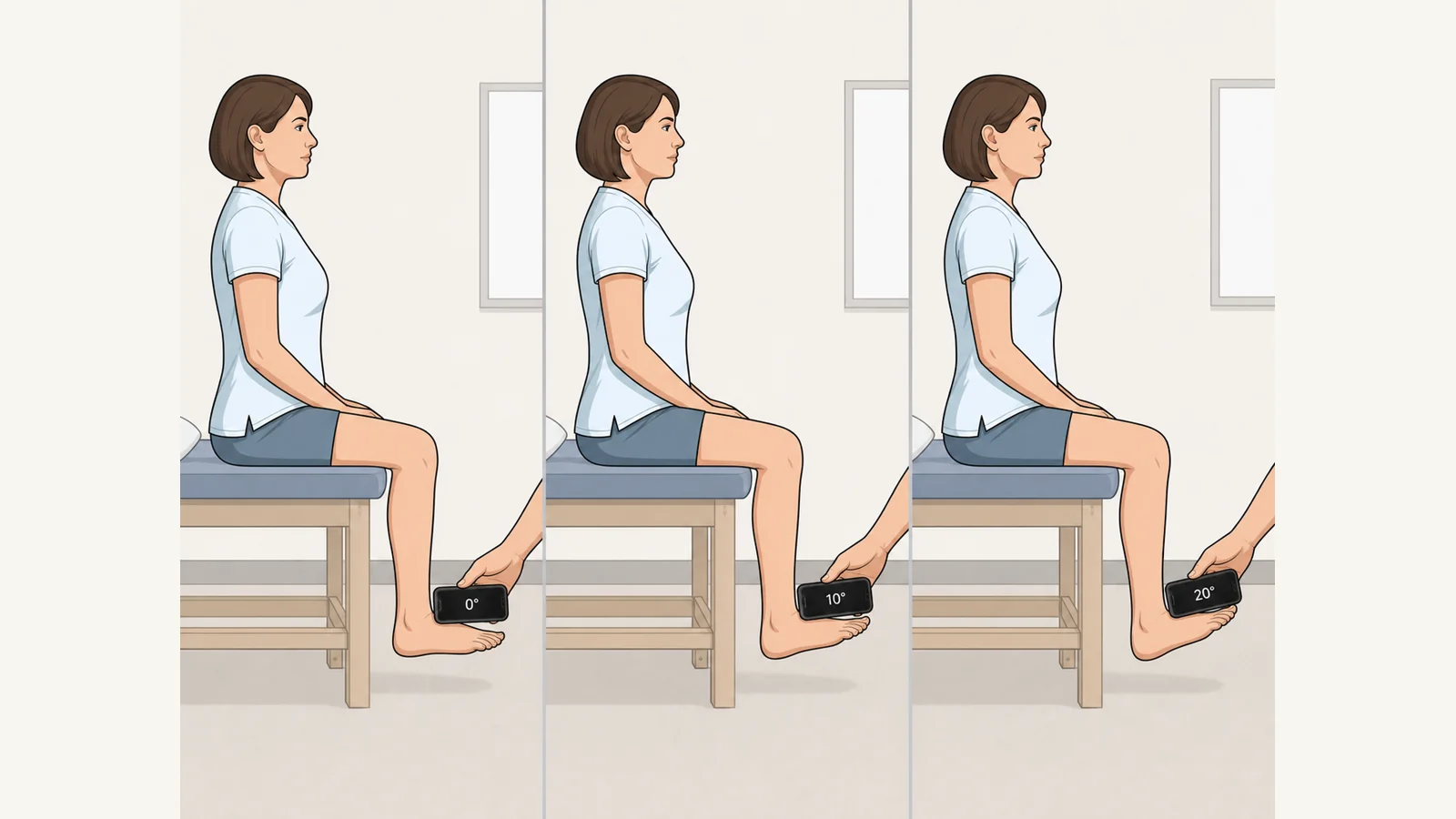
- Use sitting or supine for non-weight-bearing measurement. Document whether the knee is flexed or extended because gastrocnemius tension changes the result.
- Stabilization
- Stabilize the tibia and fibula while preventing foot pronation, eversion, or hip rotation from substituting for true talocrural dorsiflexion.
- Landmarks
- Use the lateral malleolus as the axis, the fibular head as the proximal reference, and the fifth metatarsal as the distal reference.
Step-by-Step Measurement
- Set the foot at neutral and calibrate the baseline.
- Move the foot toward the shin while keeping the subtalar position controlled.
- Stop at the first compensation, pain-limited end range, or firm dorsiflexion endpoint.
- Record knee position, weight-bearing status, and active or passive status with the value.
Common Measurement Errors
- Letting the medial arch collapse and calling pronation dorsiflexion.
- Comparing knee-flexed and knee-extended measurements as if they were the same test.
- Mounting the device away from the fifth metatarsal line.
Guided Cobb Angle Pro Workflow
This movement has a named protocol in the app. Choose the measured side and one of its supported positions before capture.
- In Range of Motion, choose Ankle, then the guided Ankle Dorsiflexion protocol and the measured side and position.
- For Phone Sensor, secure the phone to the foot with its top pointing toward the toes. The app also offers Photo and Camera capture.
- Set neutral, move the foot upward while keeping the lower leg still, capture the end range, and record the test context in the notes.
References
- Konor MM, Morton S, Eckerson JM, et al. Reliability of three measures of ankle dorsiflexion range of motion. Int J Sports Phys Ther. 2012;7(3):279-287.
- Norkin CC, White DJ. Measurement of Joint Motion: A Guide to Goniometry. 5th ed. F.A. Davis Company; 2016.
Frequently Asked Questions
How should ankle dorsiflexion measurements be interpreted?
Record the measured value with the side, patient position, method, and active or passive status. Compare repeat measurements made the same way and interpret them with the full clinical context; one value alone cannot establish normality or a diagnosis.
Why does knee position change ankle dorsiflexion?
The gastrocnemius crosses both the knee and ankle, so a straight knee increases its tension and can reduce dorsiflexion. Always document whether the knee was flexed or extended.
How do you avoid mistaking pronation for dorsiflexion?
Keep the subtalar joint controlled and prevent the medial arch from collapsing. Midfoot pronation can look like dorsiflexion but does not reflect true talocrural motion.