





Measurement Snapshot
There is no single value that establishes normality for every person or method. Record the setup and compare measurements in clinical context.
Internal rotation is useful in overhead athlete and posterior capsule workflows, but side-to-side comparison and total arc context matter more than a single isolated value.
Standardized Setup
- Patient Position
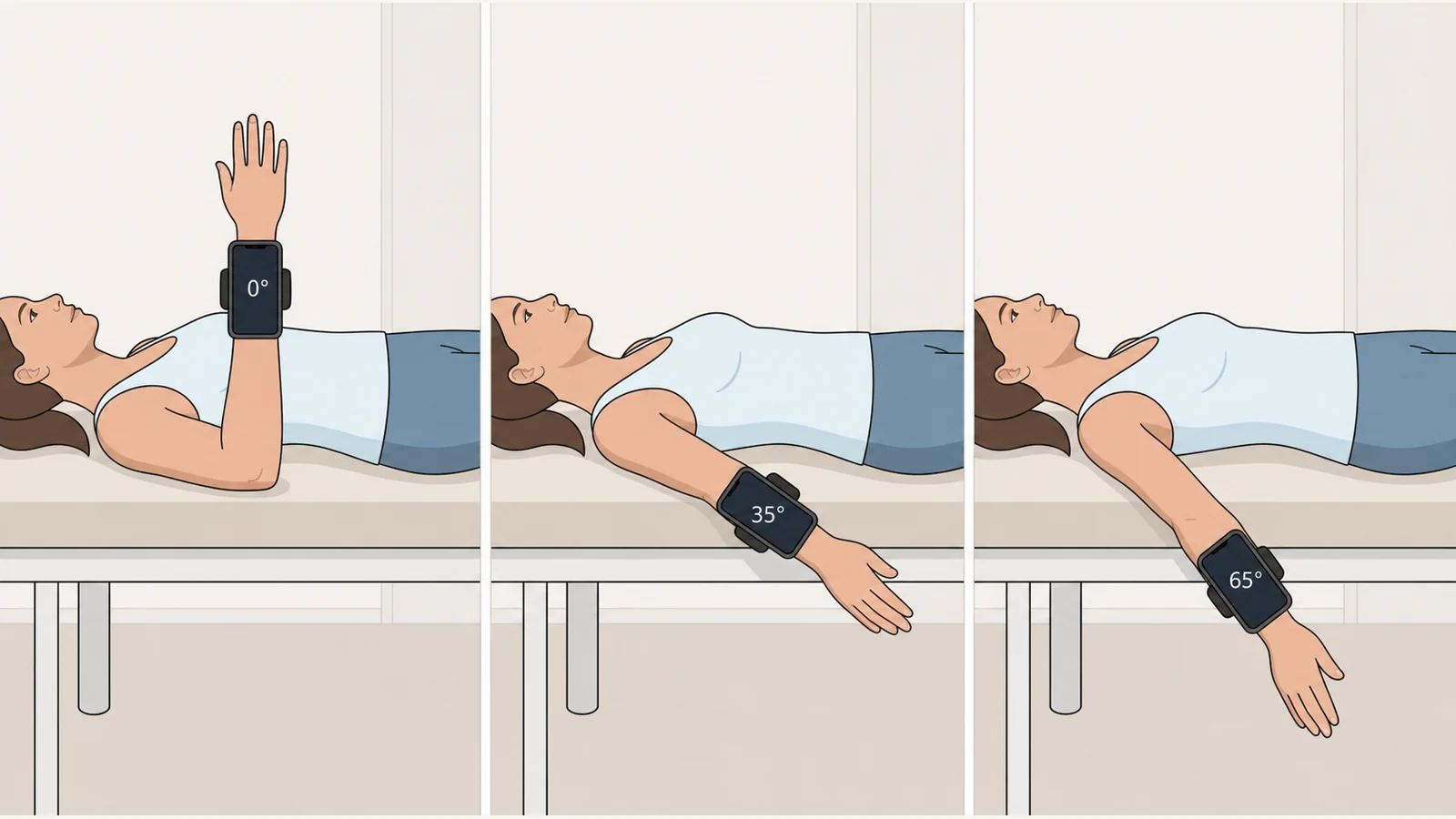
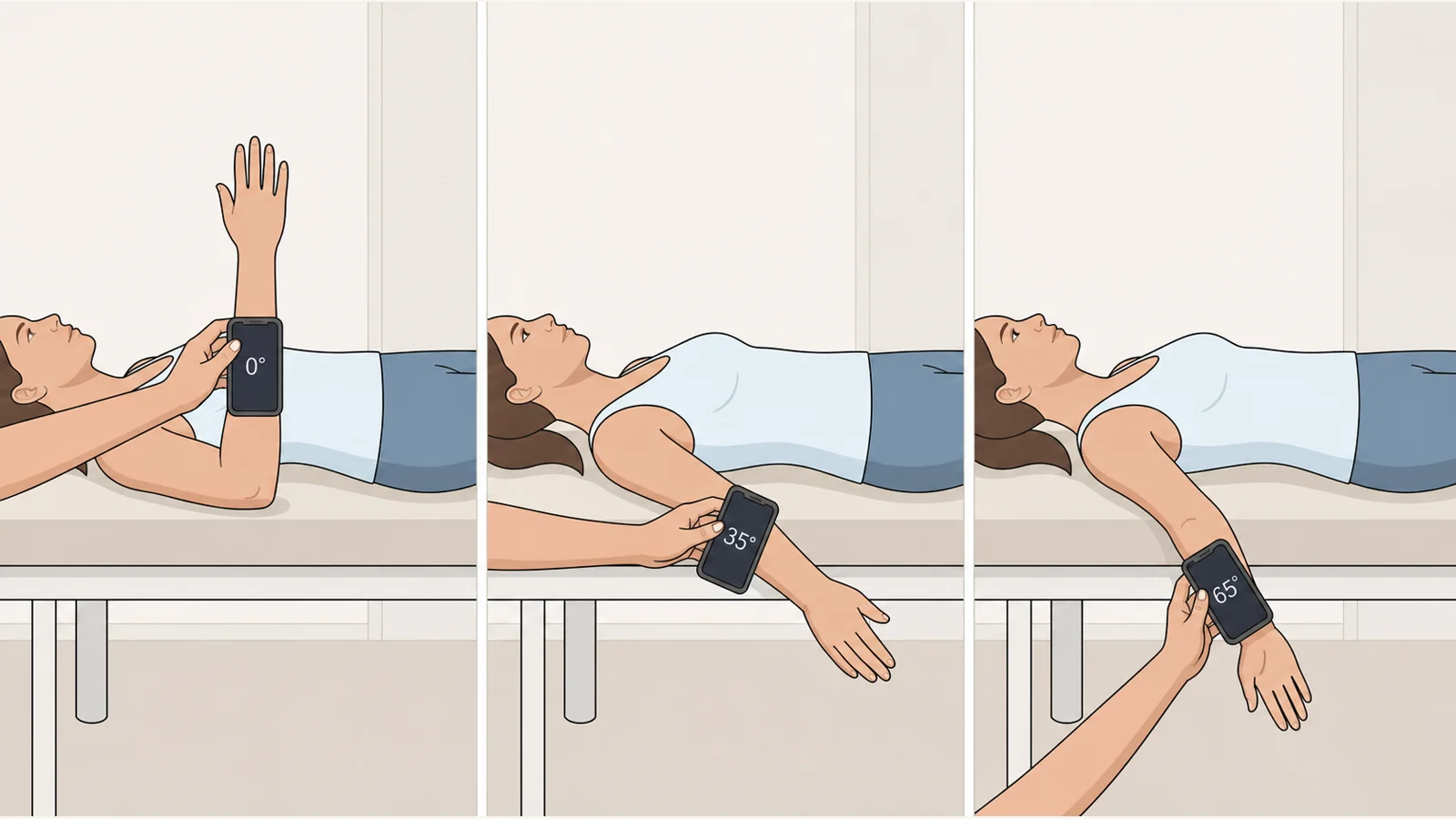
- Place the patient supine with the shoulder abducted to 90 degrees, elbow flexed to 90 degrees, and forearm vertical at the start.
- Stabilization
- Apply scapular stabilization so the anterior shoulder does not lift away from the table as the forearm rotates downward.
- Landmarks
- Use the olecranon as the axis, a vertical line as the stationary reference, and the ulna toward the ulnar styloid as the moving reference.
Step-by-Step Measurement
- Set the shoulder and elbow at 90 degrees and calibrate the vertical forearm as zero.
- Rotate the forearm toward the table while keeping the scapula controlled.
- Stop at the first scapular lift, pain-limited end range, or true rotational limit.
- Document side, active or passive status, and whether the measured shoulder is dominant.
Common Measurement Errors
- Letting the scapula tip forward off the table.
- Changing the shoulder abduction angle during rotation.
- Mounting the phone obliquely instead of parallel to the ulna.
Guided Cobb Angle Pro Workflow
This movement has a named protocol in the app. Choose the measured side and one of its supported positions before capture.
- In Range of Motion, choose Shoulder, then the guided Shoulder Internal Rotation protocol and the measured side and position.
- For Phone Sensor, secure the phone to the forearm with its top pointing toward the wrist. The app also offers Photo and Camera capture.
- Set neutral in the reviewed shoulder rotation start position, rotate inward without moving the shoulder or trunk, capture the end range, and record the setup in the notes.
References
- Wilk KE, Reinold MM, Dugas JR, et al. Glenohumeral internal rotation deficit in overhead athletes. Am J Sports Med. 2011;39(2):384-391.
- Kendall FP, McCreary EK, Provance PG, et al. Muscles: Testing and Function with Posture and Pain. 5th ed. Lippincott Williams & Wilkins; 2005.
Frequently Asked Questions
How should shoulder internal rotation measurements be interpreted?
Record the measured value with the side, patient position, method, and active or passive status. Compare repeat measurements made the same way and interpret them with the full clinical context; one value alone cannot establish normality or a diagnosis.
Why is the 90/90 position used for internal rotation?
Abducting the shoulder to 90 degrees and flexing the elbow to 90 degrees standardizes the starting geometry so repeat measurements are comparable and the forearm can serve as a clean moving reference.
What is GIRD and why does it matter?
Glenohumeral internal rotation deficit describes reduced internal rotation relative to the opposite shoulder, often seen in overhead athletes. It is interpreted with total rotational arc rather than the internal rotation number alone.