




Measurement Snapshot
There is no single value that establishes normality for every person or method. Record the setup and compare measurements in clinical context.
Shoulder abduction ROM is often tracked in rotator cuff, impingement, and adhesive capsulitis workflows. The value should be interpreted with pain behavior, strength testing, and clinician judgment.
Standardized Setup
- Patient Position
- Seat or stand the patient tall with the arm starting at the side and the palm gradually rotating upward as elevation passes shoulder height.
- Stabilization
- Prevent lateral trunk flexion, shrugging, and early scapular elevation that substitutes for glenohumeral movement.
- Landmarks
- Use the anterior acromion region as the axis, the sternum as the stationary reference, and the anterior humerus as the moving reference.
Step-by-Step Measurement
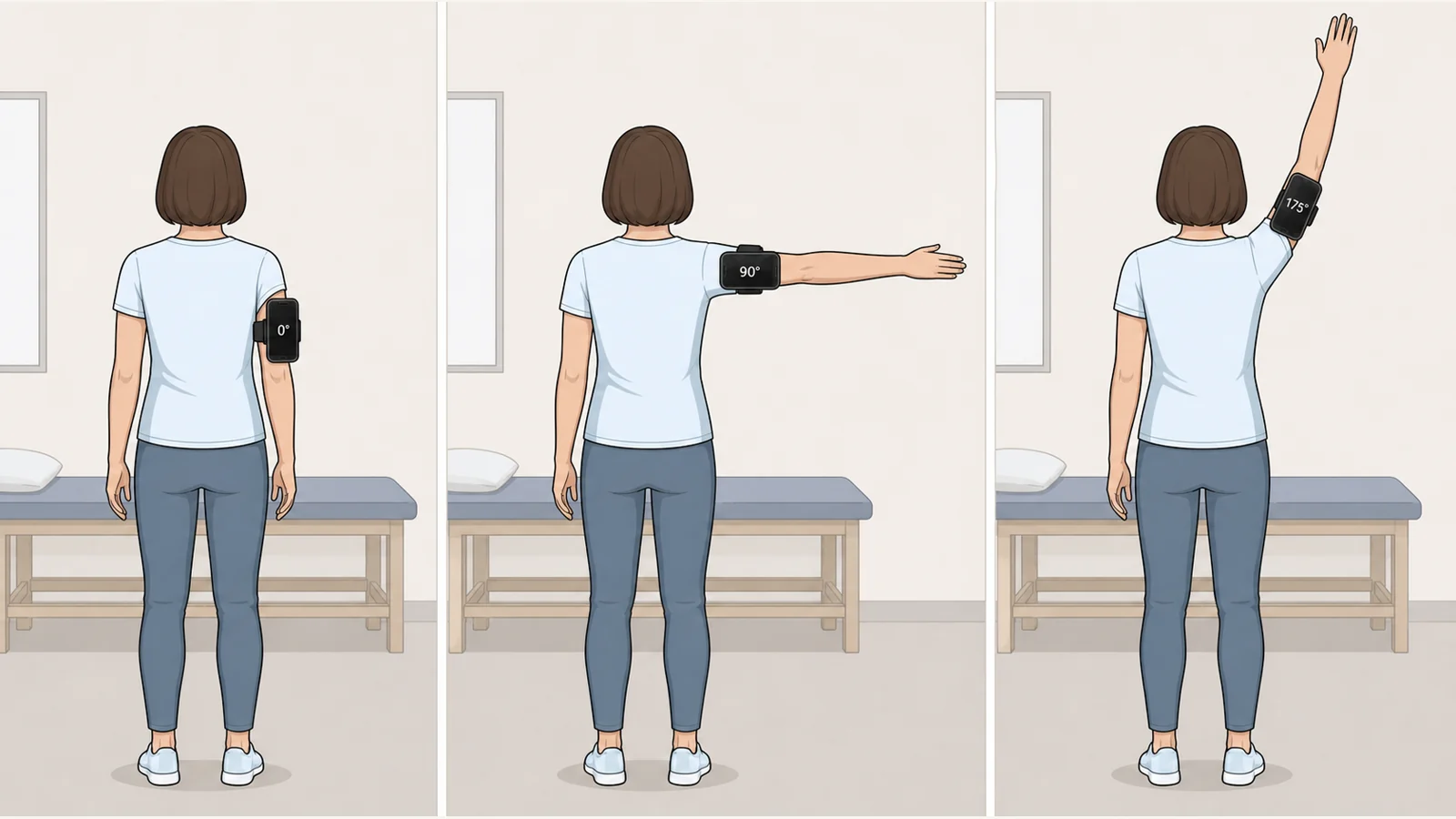
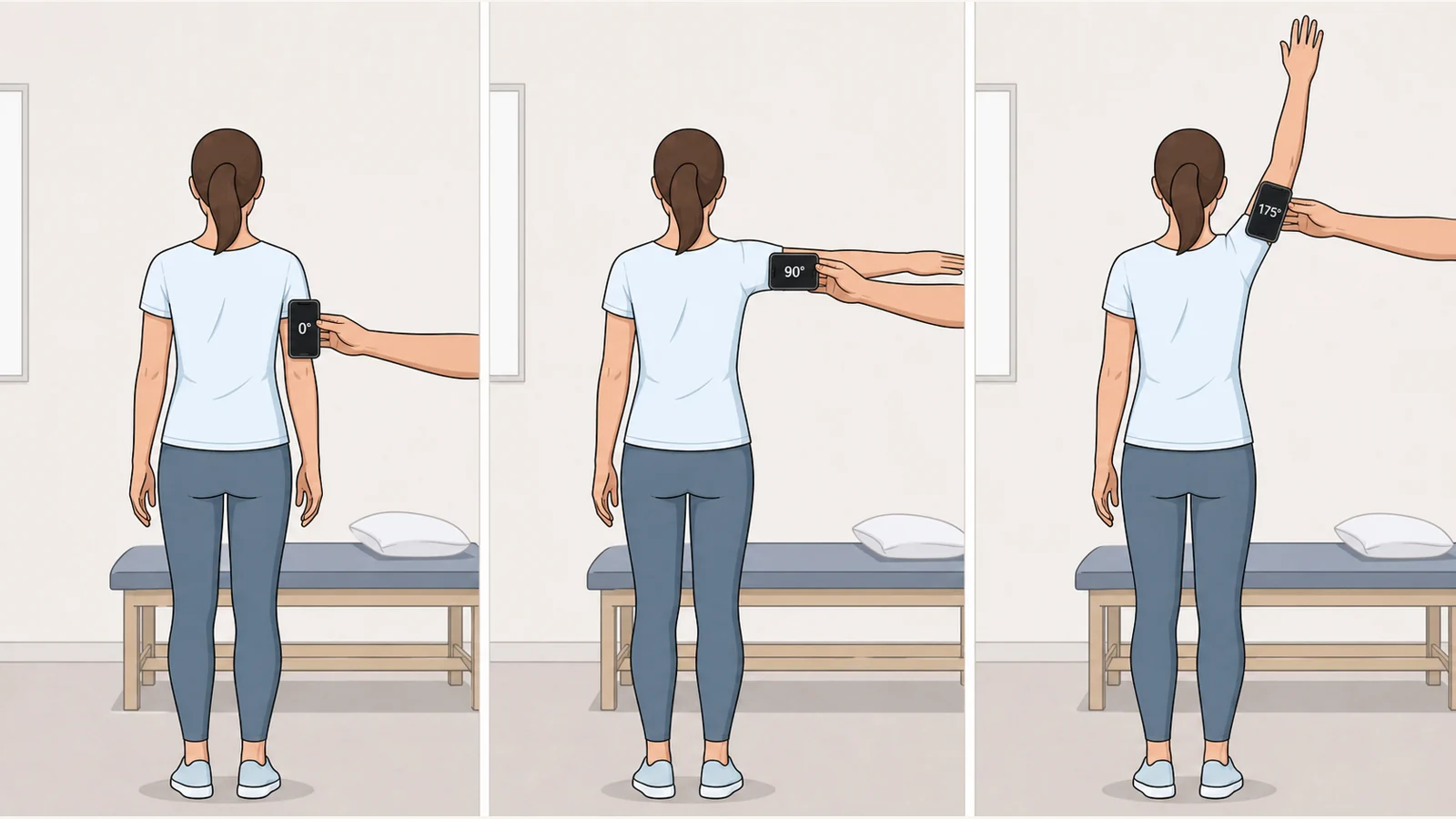
- Zero the measurement with the arm at the side.
- Ask the patient to lift the arm out to the side in the frontal plane.
- Watch for trunk side bend or shoulder shrugging and stop when compensation begins.
- Record the final angle with the testing position and active or passive label.
Common Measurement Errors
- Allowing the patient to side bend away from the measured arm.
- Failing to externally rotate the arm as it approaches overhead range.
- Capturing scapular elevation as if it were pure glenohumeral abduction.
Custom Cobb Angle Pro Workflow
The app does not provide a named protocol for this movement. Use Custom as the body part, choose the movement, and apply your own clinical measurement method.
- In Range of Motion, choose Custom as the body part, then Abduction as the movement. The app does not provide a named Shoulder Abduction protocol.
- Choose Photo, Camera, or Phone Sensor and use your own measurement setup. Custom measurements have generic in-app guidance rather than a reviewed movement-specific protocol.
- Record Shoulder Abduction, side, position, and method in the case label or notes so the saved Custom measurement can be interpreted later.
References
- Magee DJ. Orthopedic Physical Assessment. 7th ed. Elsevier; 2020.
- Boone DC, Azen SP. Normal range of motion of joints in male subjects. J Bone Joint Surg Am. 1979;61(5):756-759.
Frequently Asked Questions
How should shoulder abduction measurements be interpreted?
Record the measured value with the side, patient position, method, and active or passive status. Compare repeat measurements made the same way and interpret them with the full clinical context; one value alone cannot establish normality or a diagnosis.
Why does the arm need to rotate during abduction?
Without external rotation as the arm passes shoulder height, the greater tuberosity impinges and blocks full range. Allowing the palm to rotate upward lets the glenohumeral joint complete abduction.
How do you avoid capturing scapular motion as abduction?
Prevent lateral trunk flexion and early shoulder shrugging, and stop the measurement when compensation begins so the value reflects glenohumeral abduction rather than scapular elevation.